
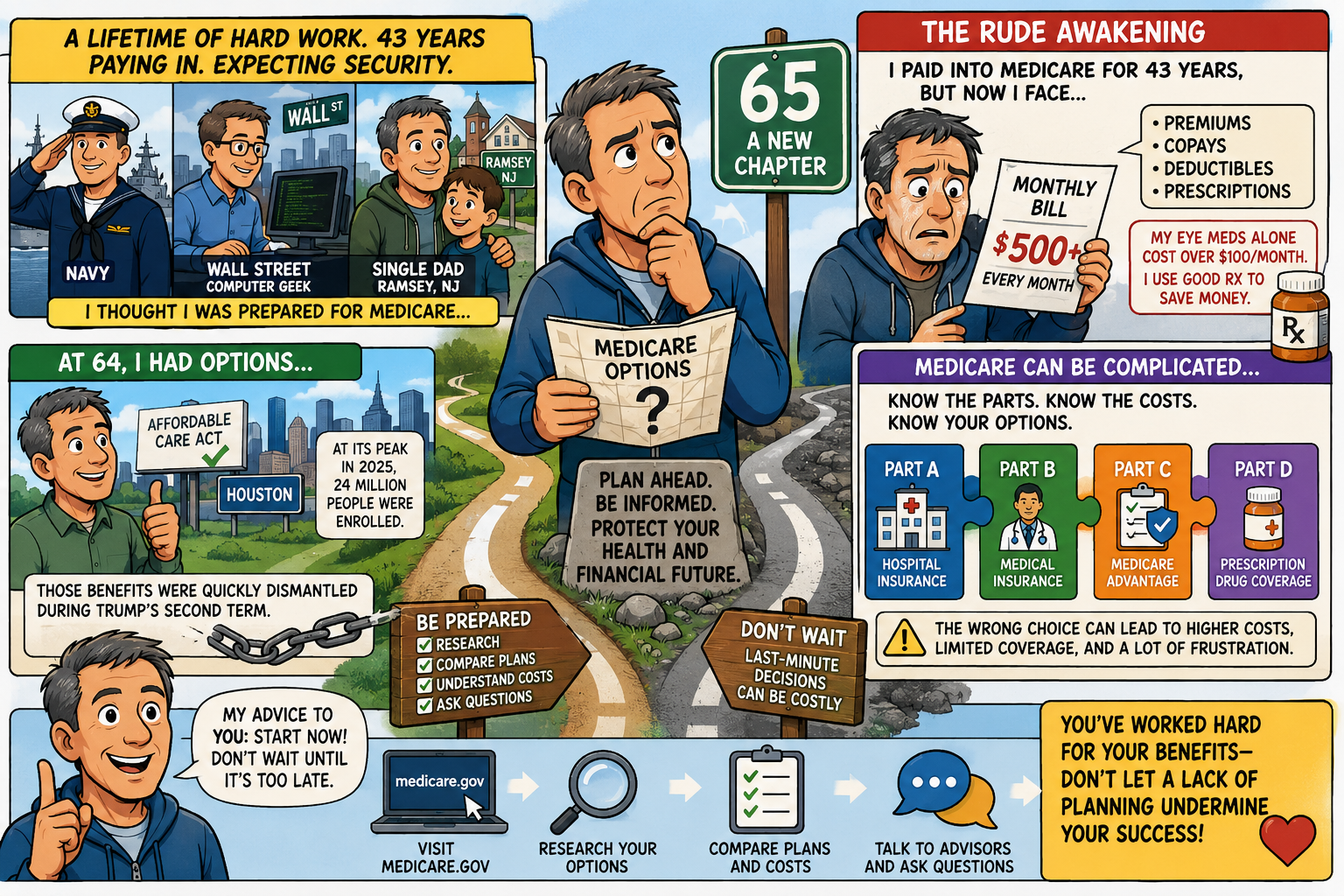
As I approached my 65th birthday, I found myself reflecting on my healthcare journey over the years. Having served in the Navy, spent time as a computer geek on Wall Street, and again altered my path navigating life to be a single dad in Ramsey, New Jersey, I thought I was well-prepared for the transition to Medicare. But what I encountered felt like a rude awakening. I paid into Medicare for 43 years, expecting a solid return on that investment. Instead, I now face a monthly bill of over $500 to maintain my coverage and keep up with my eye medications. This isn’t just my story; it’s a wake-up call for many nearing retirement.
Read the full source story here: https://www.medicare.gov/basics/get-started-with-medicare/medicare-basics/what-does-medicare-cost
When I was 64, living in Houston, I had the best healthcare plan I had experienced in 25 years. Thanks to the Affordable Care Act, I was only paying $50 a month for Marketplace healthcare. This was a significant relief, allowing me to focus on my family and my career without the constant worry about rising medical costs. At it’s peak in 2025 there were 24 million people enrolled in AHA. Unfortunately, as we all know, those benefits were quickly dismantled during Trump’s second term, and the shift in healthcare accessibility has been profound.
Fast forward to today, and the reality is stark. Now that I’m enrolled in Medicare, I see the other side of the coin. While Medicare is often touted as a safety net for seniors, the costs can be staggering. The monthly premium I pay is just the tip of the iceberg. When you factor in copays, deductibles, and additional out-of-pocket expenses, the financial burden can be overwhelming. For many, the transition from a subsidized plan to Medicare can be jarring.
Before you turn 65, it’s crucial to do your homework. The Medicare landscape is filled with complexities that can catch you off guard. I wish I had taken more time to understand how the system works and what my options were. Now, I’m left with a hefty bill and the realization that I should have planned better.
Many people underestimate the real costs associated with Medicare. According to Medicare FAQ, the monthly premium for Medicare Part B is $202.90, but this can vary based on the plans you pick and your income as well. For those who rely on medications, costs can skyrocket when factoring in Part D plans, which cover prescription drugs. This was a harsh lesson for me, as I now pay over $100 a month for my medications alone, and my Medicare coverage would cost me thousands more to us… I get these meds using Good RX right now.
It’s essential to understand the different parts of Medicare: Part A, Part B, Part C (Medicare Advantage), and Part D. Each has its own costs and coverage options. The confusion can lead to costly mistakes if you aren’t well-informed. For instance, some may choose a Medicare Advantage plan, thinking it will save them money, only to find that their healthcare needs aren’t met or that their out-of-pocket costs are just as high as traditional Medicare. I’ve seen friends struggle with this, leading to frustration and financial strain.
As I navigate this new chapter, I can’t help but feel a sense of urgency to share my experience. If you’re approaching 65, start looking into your Medicare options now. Don’t wait until a few months before your birthday. Take the time to research, compare plans, and understand the costs involved. Websites like Medicare.gov provide a wealth of information to help you get started.
Ultimately, it’s about being proactive rather than reactive. The stakes are high when it comes to healthcare, and the financial impact can be significant. I’ve learned the hard way that planning ahead is the best way to ensure you’re not caught off guard when the time comes to enroll in Medicare. This is not just about health; it’s about your financial future and your peace of mind.
So, to everyone who is approaching this milestone: take my experience to heart. Look into your Medicare options well before you turn 65. Understand the costs, the plans, and the potential pitfalls. You’ve worked hard for your benefits—don’t let a lack of planning undermine your success.
